Women/DAMA
Women/DAMA
Women/DAMA
Industry: Human sciences
Client: Multiple universities
Year: 2025
DATAVIZ
DASHBOARD
01
Brief
The goal of Women Writing Around the Camera (an extension of the DAMA project) was to create a node-based data visualization area, specifically using an RDF graph, capable of linking actresses, writers, keywords, places, and books. A section of the website was also dedicated to data visualization, connecting the entities mentioned above.
02
Client
The project was commissioned by the University of Catania, bringing together multiple departments in the humanities.
03
Team
I handled the entire UX usability and the full UI, from individual components and their functionality on the site to branding aspects. Three developers contributed to the creation of the project.
WOMEN/DAMA
Challenge
The main challenge was translating something highly technical like an RDF graph into a simple, intuitive interface designed for humanities-oriented researchers. Clarity in presenting the various data was essential.
WOMEN/DAMA
The aim of the project
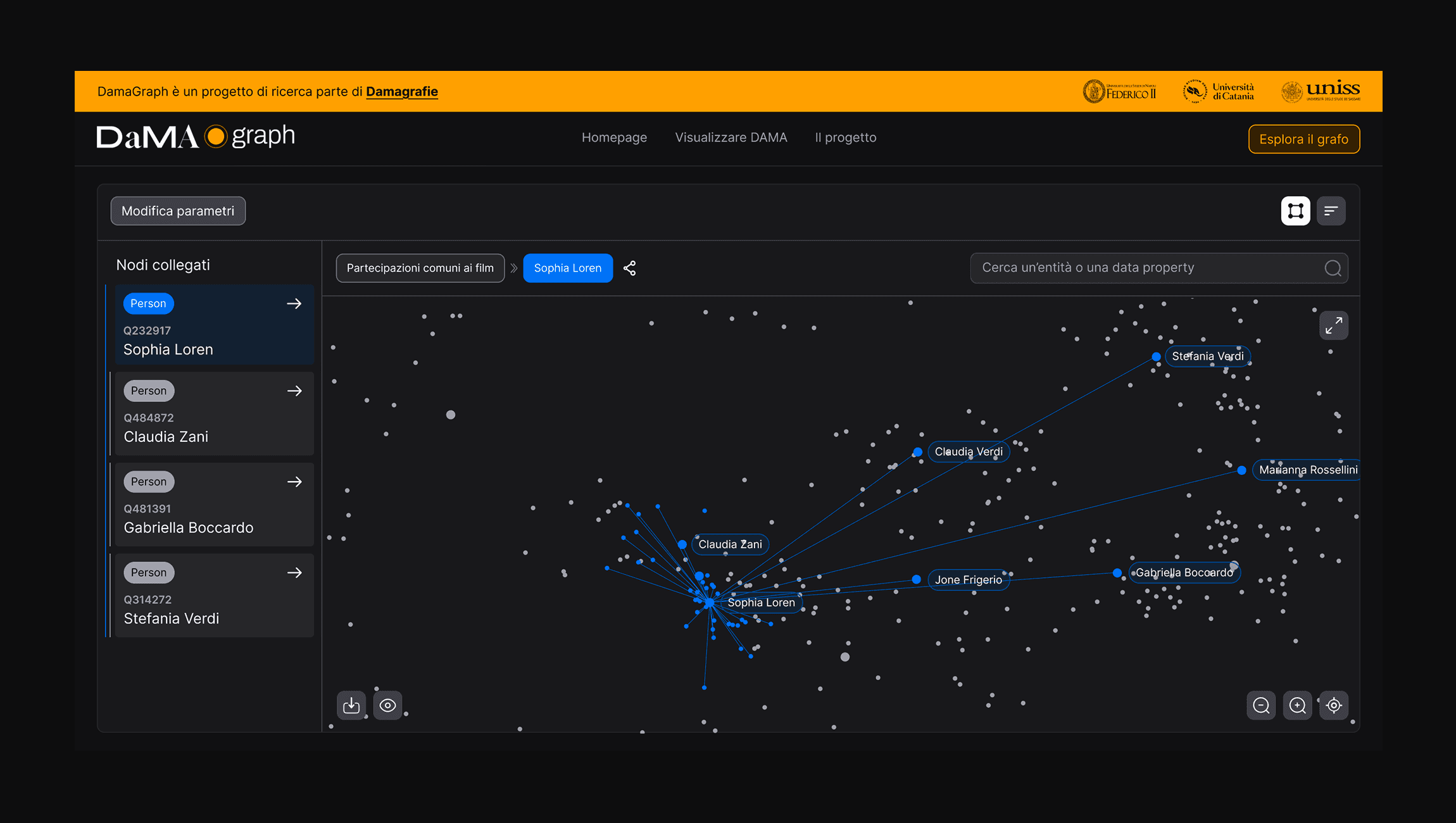
The aim of the project was to highlight, through an interactive RDF graph, connections that would otherwise be difficult to uncover, considering that the typical user is a researcher. For example, one of the objectives was to show correlations between two actors who took part in different films within a specific time frame.
WOMEN/DAMA
Approach and solution
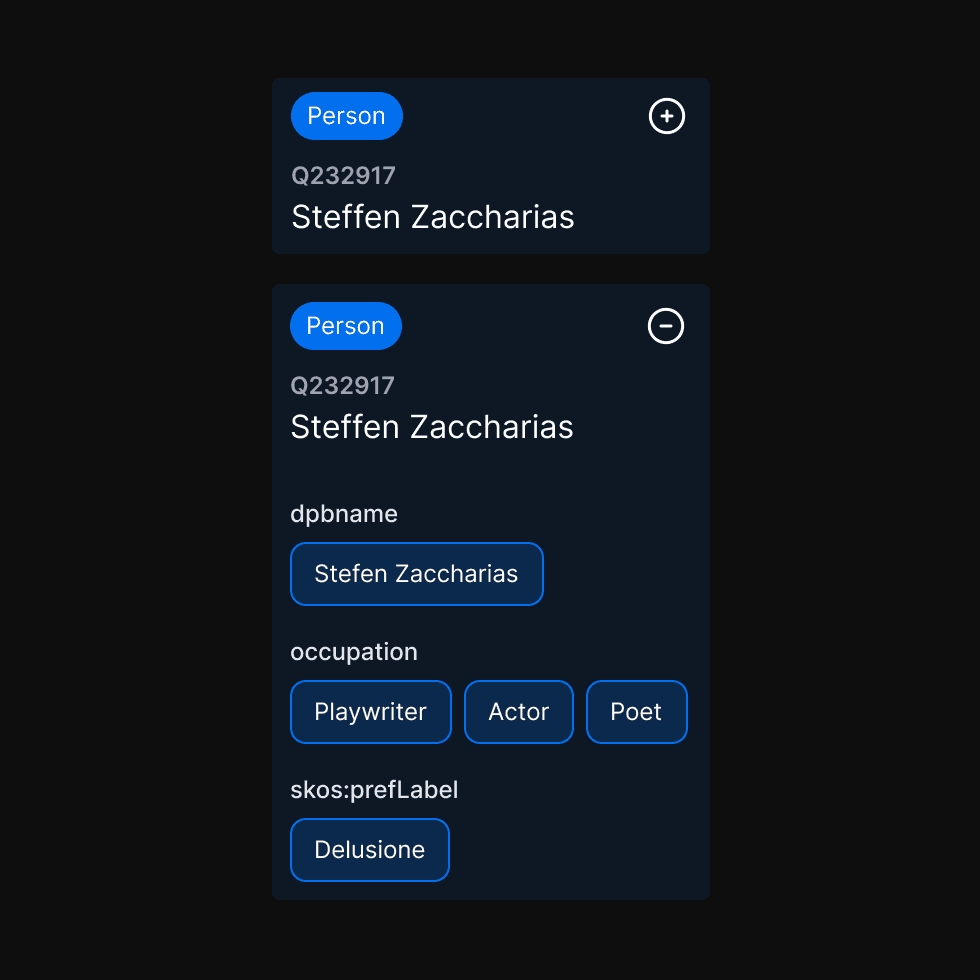
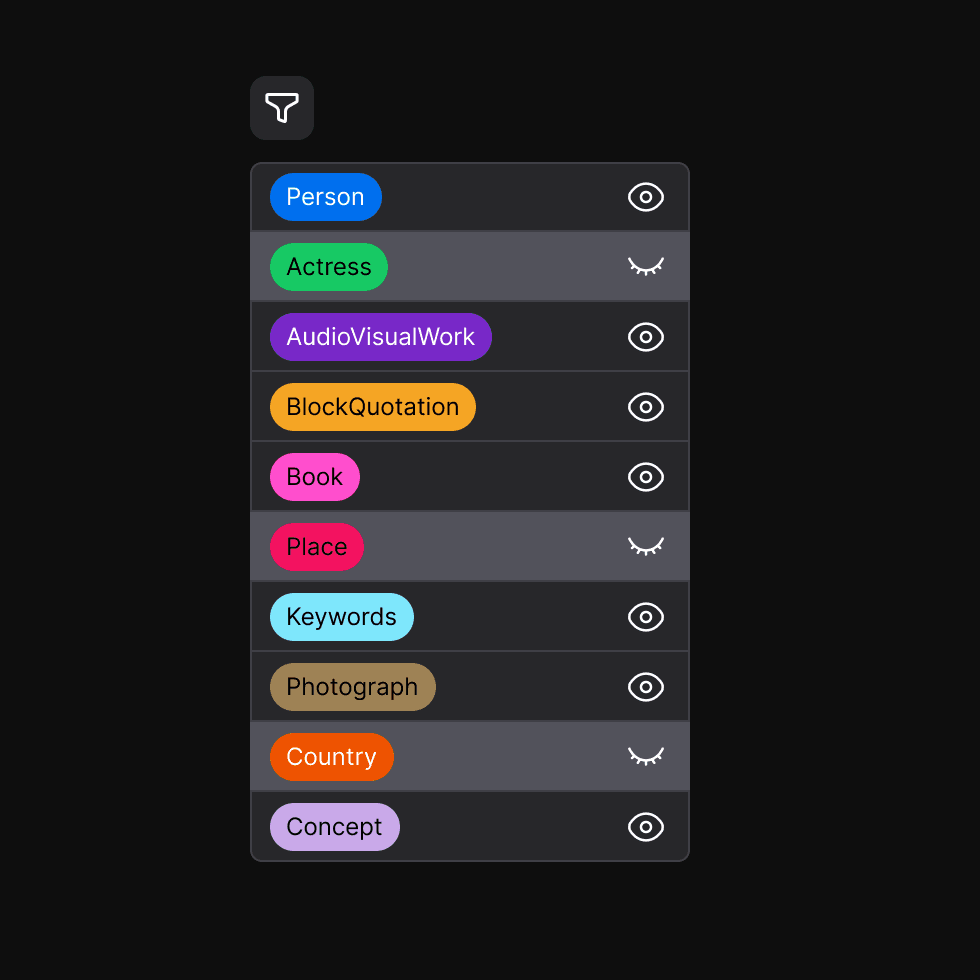
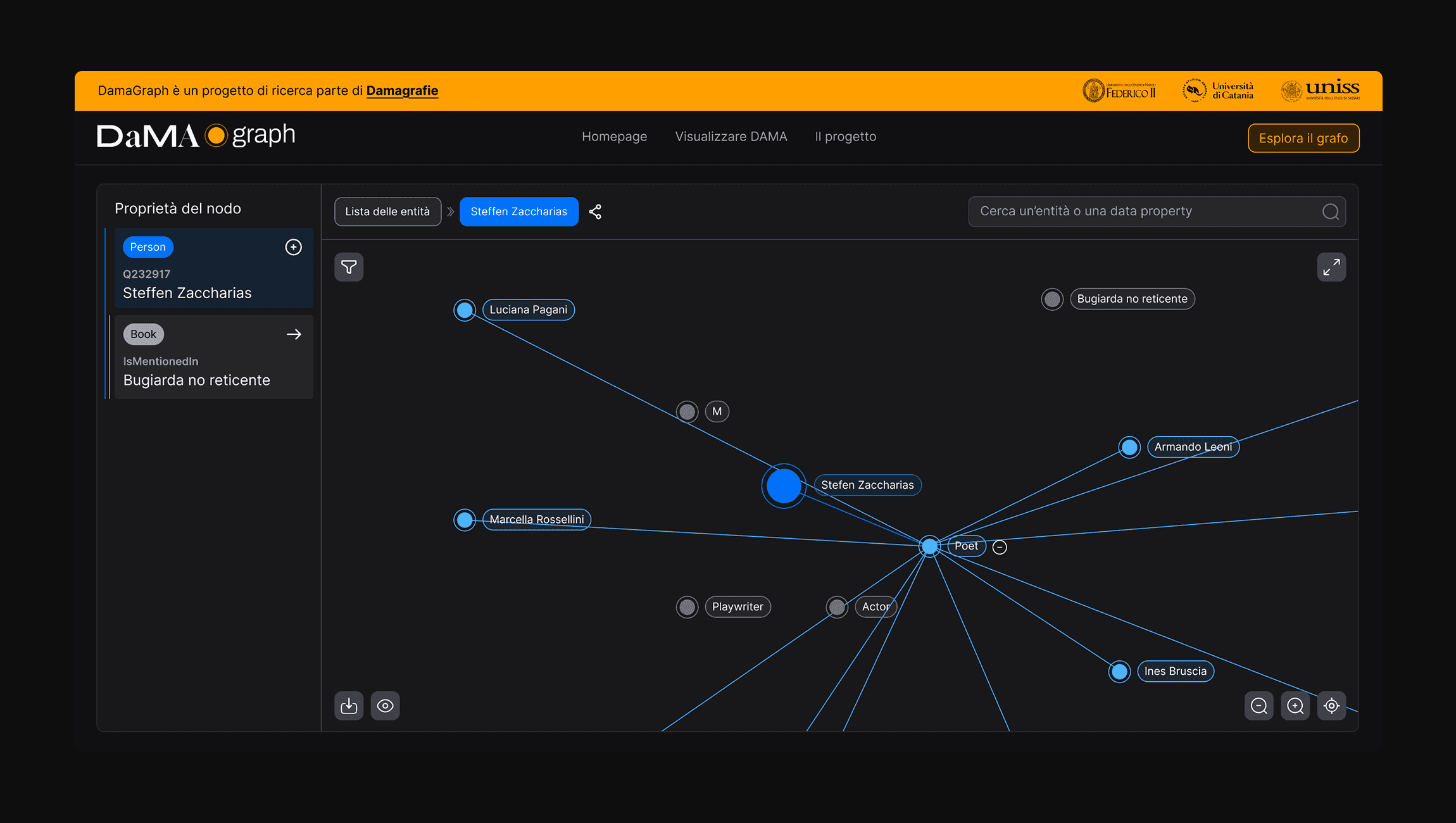
The solution adopted was a dashboard featuring a node-based RDF graph, where nodes can be expanded to reveal new entities and new connections. The entire system was designed to be as intuitive and straightforward as possible.
WOMEN/DAMA
Final outcome
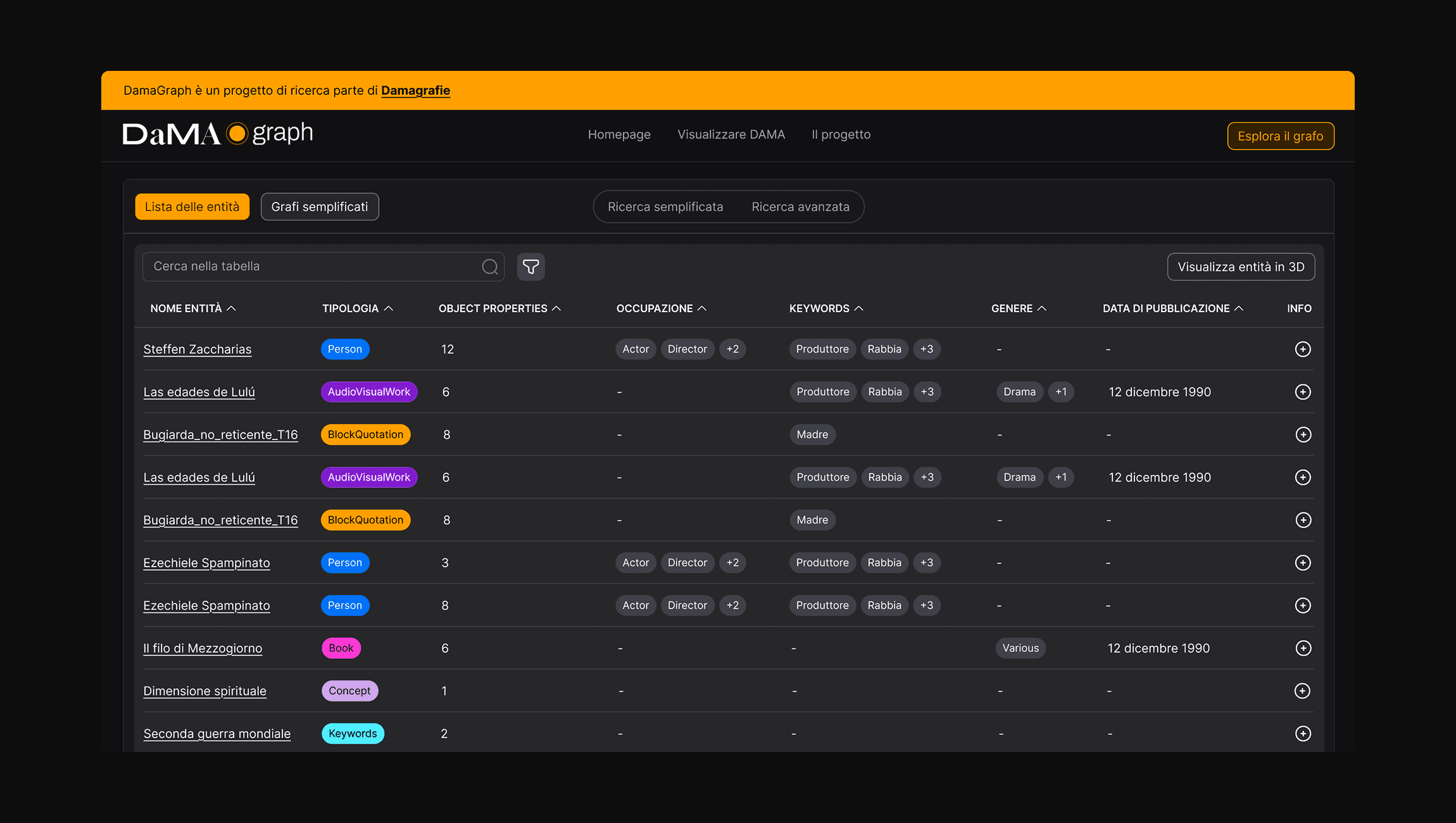
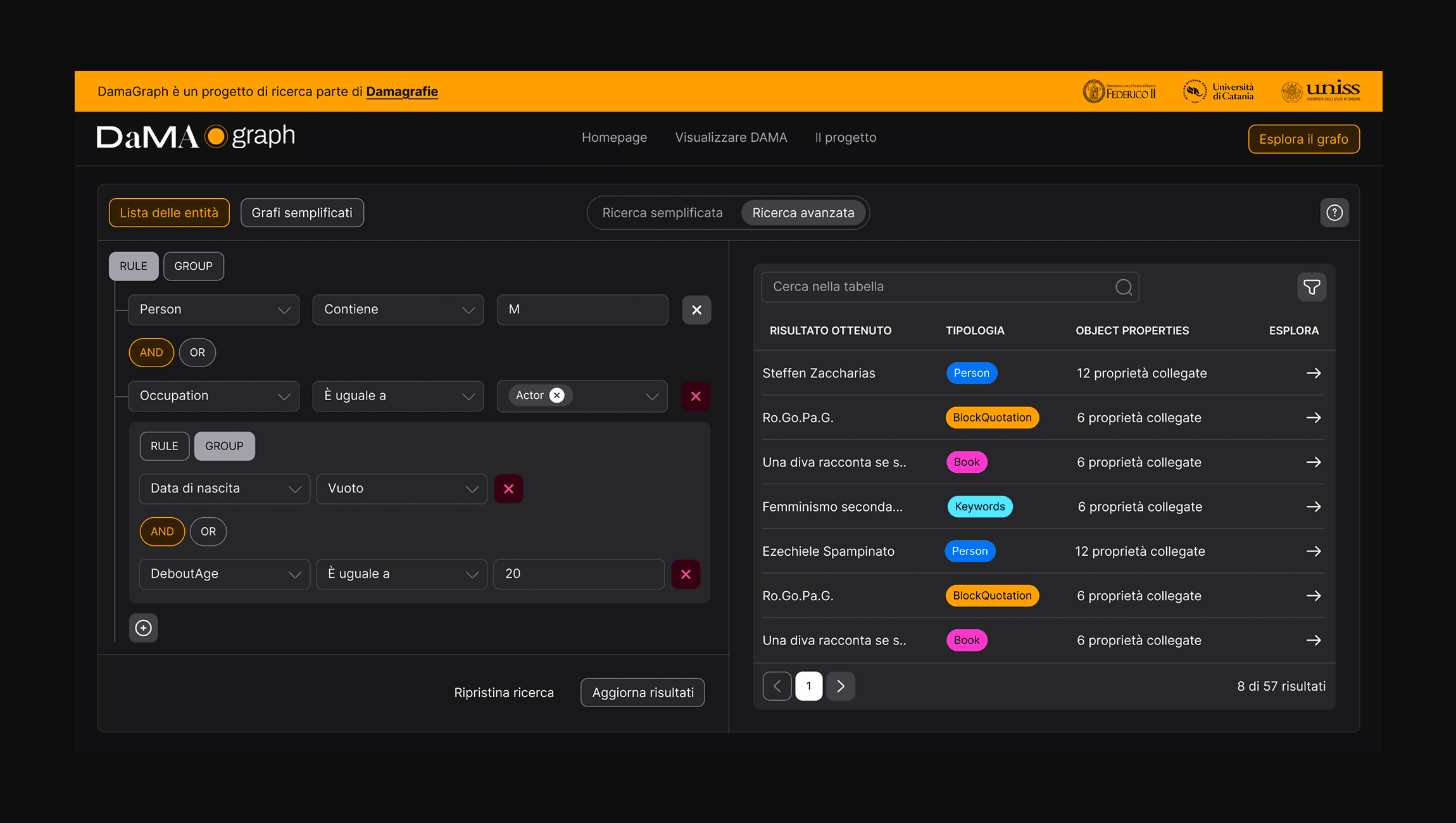
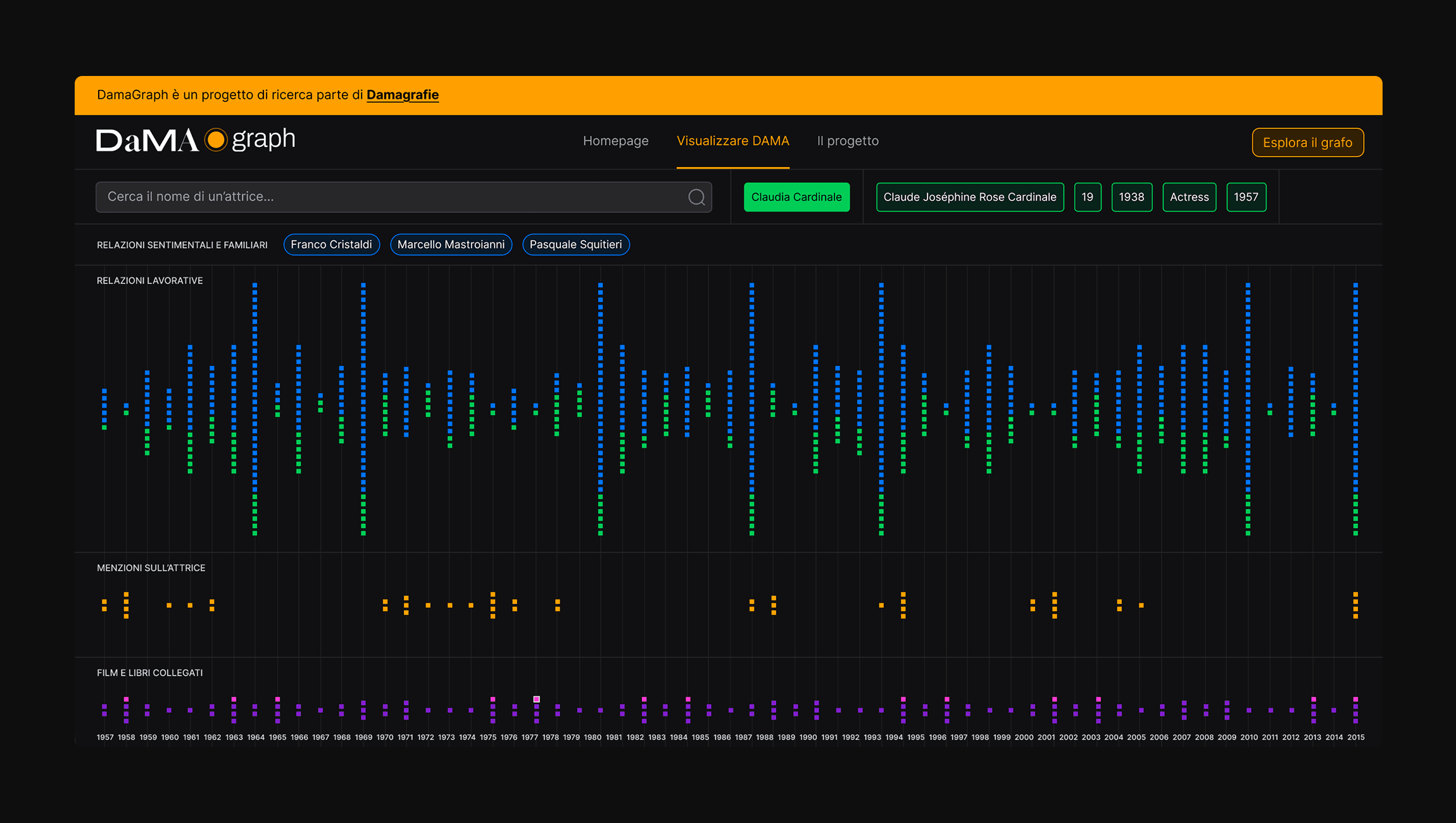
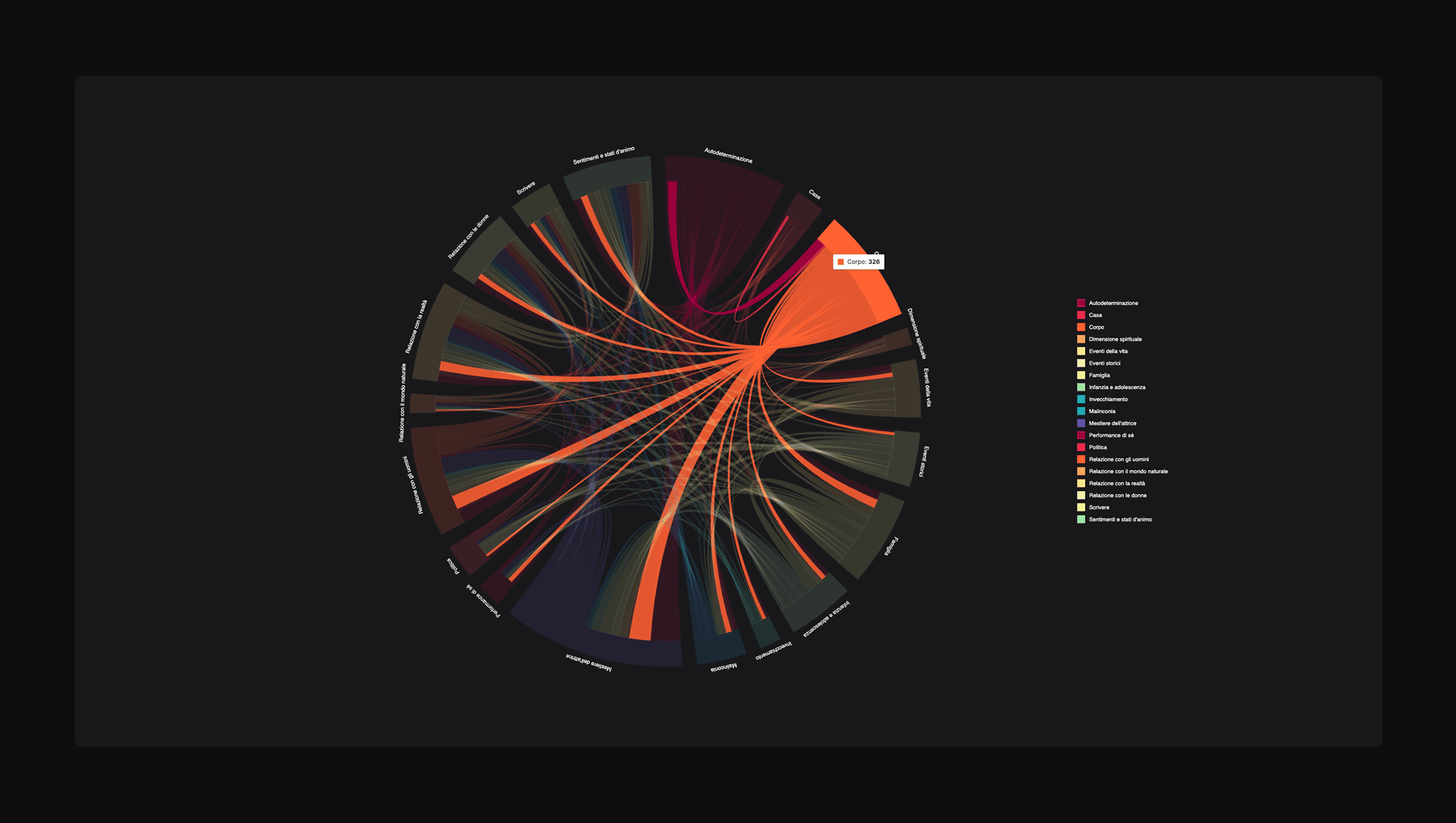
The final result is a dashboard designed for humanities researchers, who can use this tool to enrich their work with discoveries related to actresses and writers, their works, or the people they encountered throughout their lives. The data visualization helps reinforce the research process, making it more interactive and visually immediate.
02
Client
The project was commissioned by the University of Sassari and Sapienza University of Rome, bringing together multiple departments, including computer science and the humanities.
03
Team
I handled the entire UX usability and the full UI, from individual components and their functionality on the site to branding aspects. Three developers contributed to the creation of the project.
WOMEN/DAMA
The aim of the project
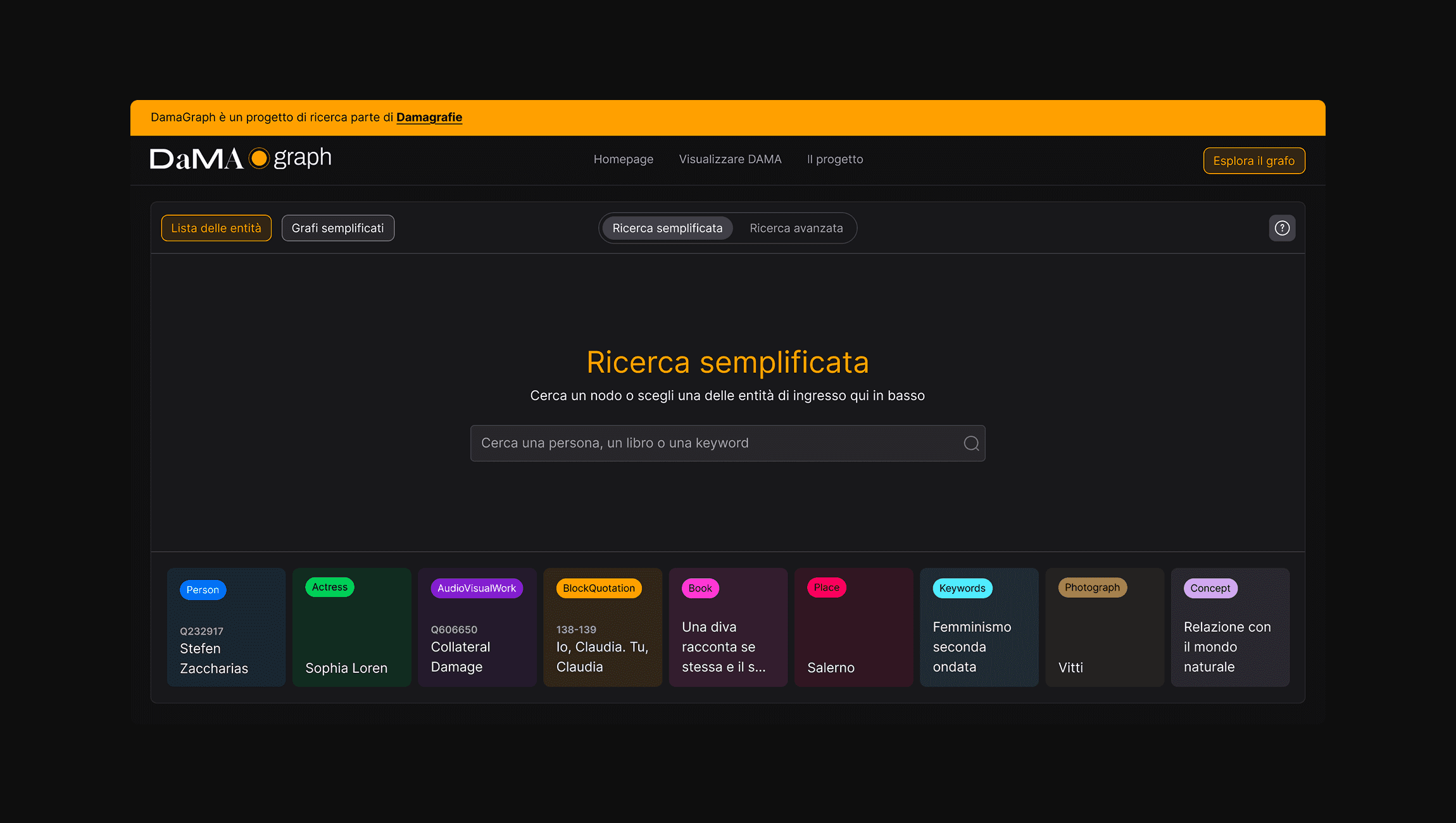
The aim of the project was to highlight, through an interactive RDF graph, connections that would otherwise be difficult to uncover, considering that the typical user is a researcher. For example, one of the objectives was to show correlations between two actors who took part in different films within a specific time frame.
WOMEN/DAMA
Challenge
The main challenge was translating something highly technical like an RDF graph into a simple, intuitive interface designed for humanities-oriented researchers. Clarity in presenting the various data was essential.
WOMEN/DAMA
Approach and solution
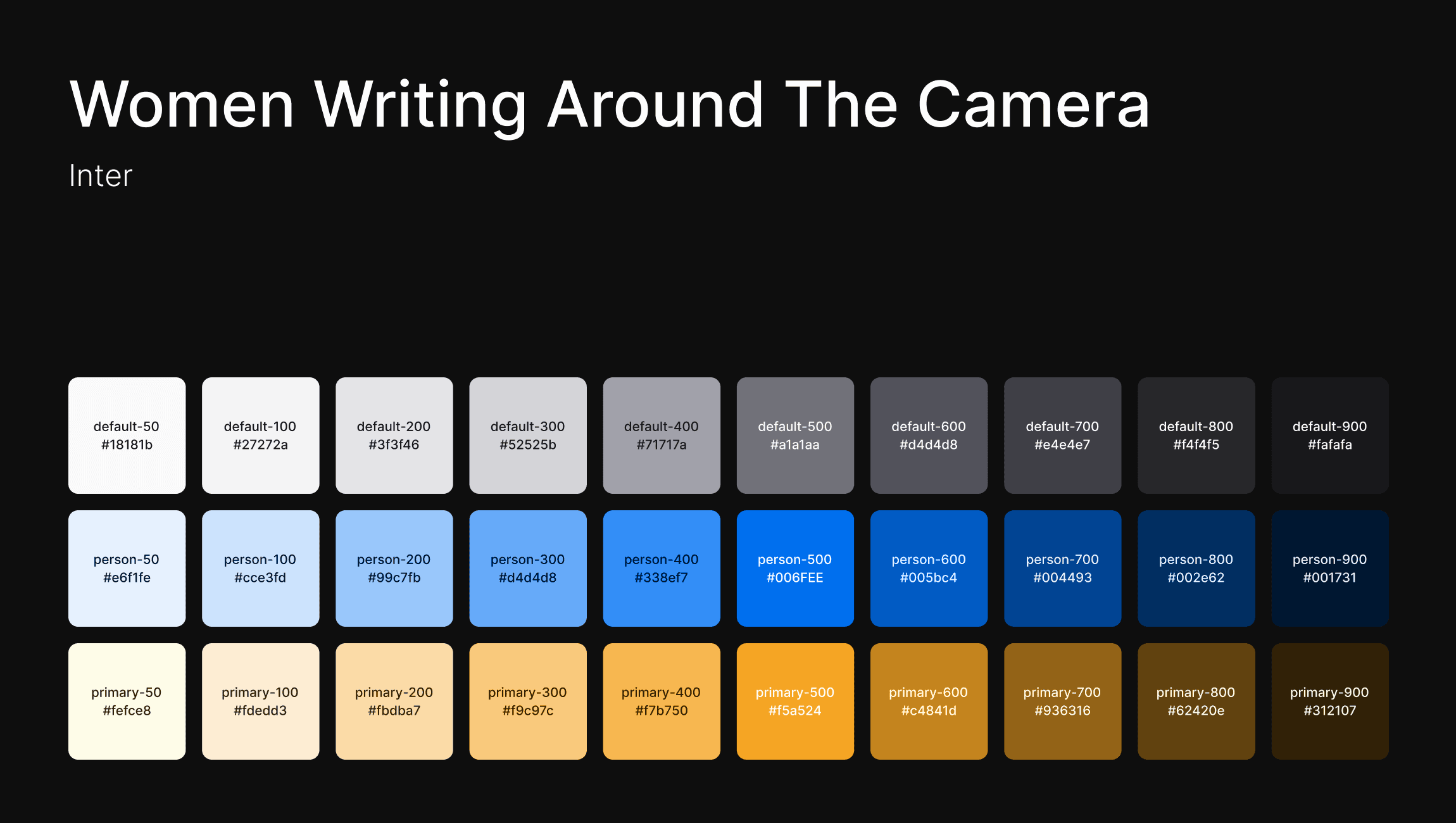
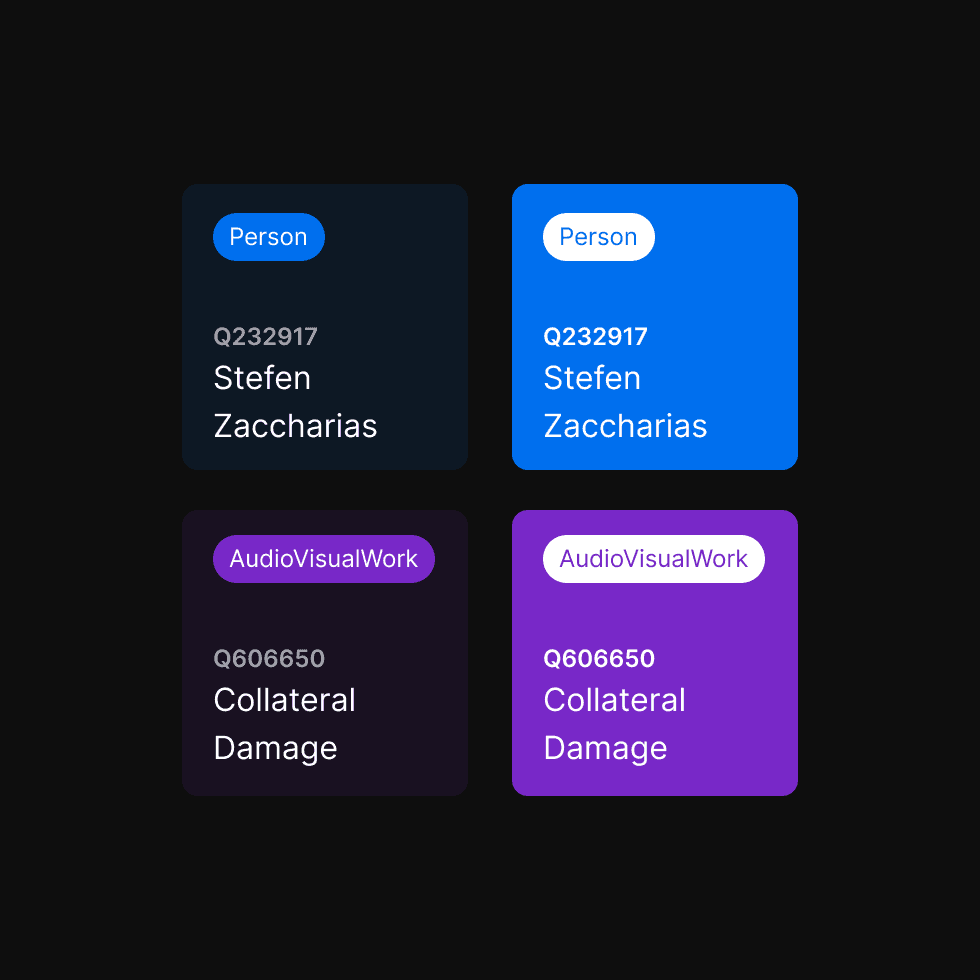
The solution adopted was a dashboard featuring a node-based RDF graph, where nodes can be expanded to reveal new entities and new connections. The entire system was designed to be as intuitive and straightforward as possible.
FINAL OUTCOME
FINAL OUTCOME
FINAL OUTCOME
FINAL OUTCOME
FINAL OUTCOME
FINAL OUTCOME
FINAL OUTCOME
FINAL OUTCOME
WOMEN/DAMA
Final outcome
The final result is a dashboard designed for humanities researchers, who can use this tool to enrich their work with discoveries related to actresses and writers, their works, or the people they encountered throughout their lives. The data visualization helps reinforce the research process, making it more interactive and visually immediate.
Challenge
Dashboard and Dataviz
Make the UX intuitive on RDF
Make RDF connections intuitive
Solution
An easy-to-use dashboard
Intuitive and modern interface
Coherent Dataviz
Stack used
Figma and FigJam
Protegé for exploring RDF files
Adobe Suite